5 tips for taking your pet on public transit
Taking your pet on public transit can be smooth with the right prep. Learn rules and socialization tips for calm, confident rides.
Summary
- Do your research ahead of time — Know your transit service’s pet rules before you ride. Policies override all tips here, always.
- Avoid awkward situations — Socialized, calm, well-behaved pets prevent rider conflict and keep trips smoother.
- Plan accordingly — Time meals and bathroom breaks to avoid smelly accidents on board.
Urban pet parents know the drill: elevators, platforms, turnstiles, crowded seats, noisy brakes, quick stops. Sometimes, getting from point A to point B means your dog or cat comes along for the ride.
Whether you’re commuting across town, heading to the vet, or planning a longer rail journey (like a weekend Amtrak adventure,) the experience can go from stressful to manageable with thoughtful preparation. The goal isn’t to avoid every challenge, it’s to prevent the preventable ones, and recover quickly from the rest.
1. Know and observe the rules
Pet policies vary widely by transit service. Some allow only service animals while others permit pets if they stay in a carrier, remain under a certain weight, or ride only during specific hours.
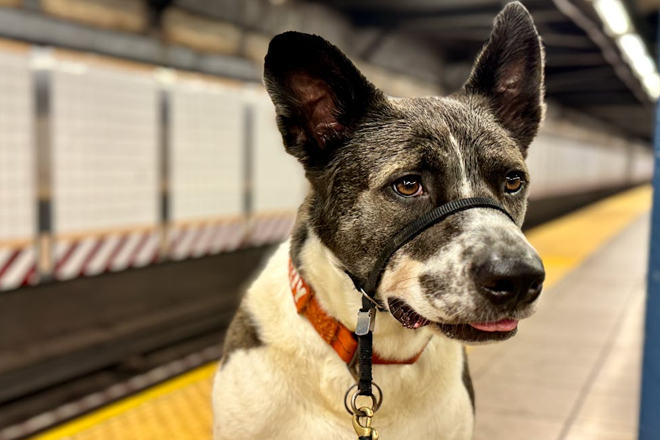
Many metro services that do allow pets require short leashes or secure carriers, and may restrict pet movement in stations, escalators, or seats. Before you ride, check official rules for weight limits, carrier dimensions, peak-hour restrictions, documentation requirements, and booking processes. Observing these rules protects your pet from unsafe situations, protects you from removal or fines, and protects other riders from avoidable conflict.
2. Socialize your pet
A socialized dog is a confident commuter. Socialization here means exposure to people, movement, noise, touch, other pets at a distance, and environments that mimic the unpredictability of transit. A dog who panics in a tight aisle or growls when brushed by a stranger can escalate a moment fast. Practice calm behavior in public simulations: busy sidewalks, outdoor seating areas, or areas with passing crowds. Reward neutrality. Reinforce leash focus. Teach that strangers aren’t threats, but also aren’t guaranteed interactions.
Getting your cat ready
Cats need practice, too. Start with carrier confidence. Leave the carrier open at home, lined with a familiar blanket or bed scent. Reward voluntary entry and exit. Build tolerance slowly. Add motion by lifting the carrier briefly, then setting it down and treating. Add sound exposure at low volume: transit-like noises played quietly while rewarding calm behavior. Take short test rides if your local service permits pets, or practice controlled exposure in train stations, outdoor transit hubs, or even your car before graduating to public transit.
3. Bring identification and shot records
Public transit means more variables, and more variables mean more opportunities for separation. A secure ID tag on a collar or harness should include your name, phone number, and city. Microchips dramatically increase reunion success if a tag is lost. Identification systems like Fido Alert are worth a shoutout here, too. They help amplify your search quickly in the exact areas pets go missing, including transit stops, city routes, and neighborhoods near stations.
Shot records may feel like overkill, but they’re relevant if your pet has a chronic or visible health condition that could cause misunderstanding from other riders, like allergies, patchy fur from dermatologic issues, or neurological conditions that affect gait. Vaccination status is also part of etiquette. A pet who is up to date on shots protects themselves, but also protects others when transit allows pets to ride near one another. As a matter of fact, it’s wise to keep a copy of your pet’s rabies certificate with you just in case it’s a legal requirement.
4. Have a pet travel kit
Transit kit planning is etiquette in action. The better prepared you are, the less likely you are to create stress for your pet or others. For short rides, keep your kit compact. For longer train travel, you can expand to include even more comfort and safety tools.
Include:
- Waste bags
- Treats
- A comfort toy or scent item
- Calming spray or pheromone support
- A muzzle
- Collapsible bowl
- Pet wipes
- Compact pet first-aid kit
5. For dogs, consider manners training
Transit environments are distraction-rich training graduation tests. Manners training is different from socialization. Socialization builds tolerance. Manners training builds obedience you can rely on when tolerance gets shaky.
The best public transit trips with pets start earlier than the ride itself. Rules keep the foundation steady. Training keeps behavior predictable. Timing keeps smells and accidents minimal. Identification keeps reunions fast if things slip. Comfort keeps escalation unlikely. Public transit with pets isn’t about being invisible. It’s about being aware, prepared, and regulated so the ride feels safer, calmer, and kinder to everyone on board. With practice and planning, your dog or cat can ride through cities and railways with more confidence and fewer stress moments.