Certified therapy dogs and therapy dog training
Therapy dogs help millions around the world each year. Learn more about certified therapy dogs and the therapy dog training process.

Summary
- Therapy animals can be used in a range of situations — You’ll find therapy dogs in hospice centers, hospitals, schools, shelters, individuals, and more.
- Therapy work looks different across support pet types — Knowing the difference between a therapy dog, an emotional support animal, and a service dog is key before you start training. This prevents unrealistic expectations and training errors.
- You and your pet will be a “therapy dog team” — The therapy dog training process requires dedication from dogs and owners alike, and depends on both yourself and your pet. Consider yourselves a team for all things therapy dog work!
Many dogs with jobs that help people are often lumped under the category of ‘therapy dog’. However, therapy dogs are a very specific type of dog with a job. These pups are usually trained to provide mental health support or enrichment for people through their presence and interaction.
More and more studies continue to find the benefits of interacting with animals on mental and physical health. Barker et al found that as little as five minutes of interaction with a therapy dog reduced the stress in hospital personnel. Similar interactions have also demonstrated a positive impact on the treatment of individuals struggling with psychiatric illnesses, as well as an improvement in the atmosphere of hospital units and patient motivation to continue with therapy.
With all this evidence to support it, it’s no wonder that more facilities are requesting and welcoming therapy dogs visits each day. What began as teams only visiting hospitals and retirement homes, has blossomed into visits to schools, juvenile detention centers, memory care units, businesses, courtrooms, therapy sessions, and more. Most of these therapy teams volunteer their time to do these visits and while some work on a one-on-one basis, others are part of a larger program.
Therapy, service, and emotional support dogs
Now that you have a general idea of what a therapy dog does - it’s important to specify what a therapy dog ISN’T. A common misconception is that a therapy dog is a service dog. This confusion often carries over to emotional support animals as well. However, there are some BIG differences between the three of these, which will impact the level of training your dog needs, as well as your access to different facilities.
Starting your therapy dog training journey
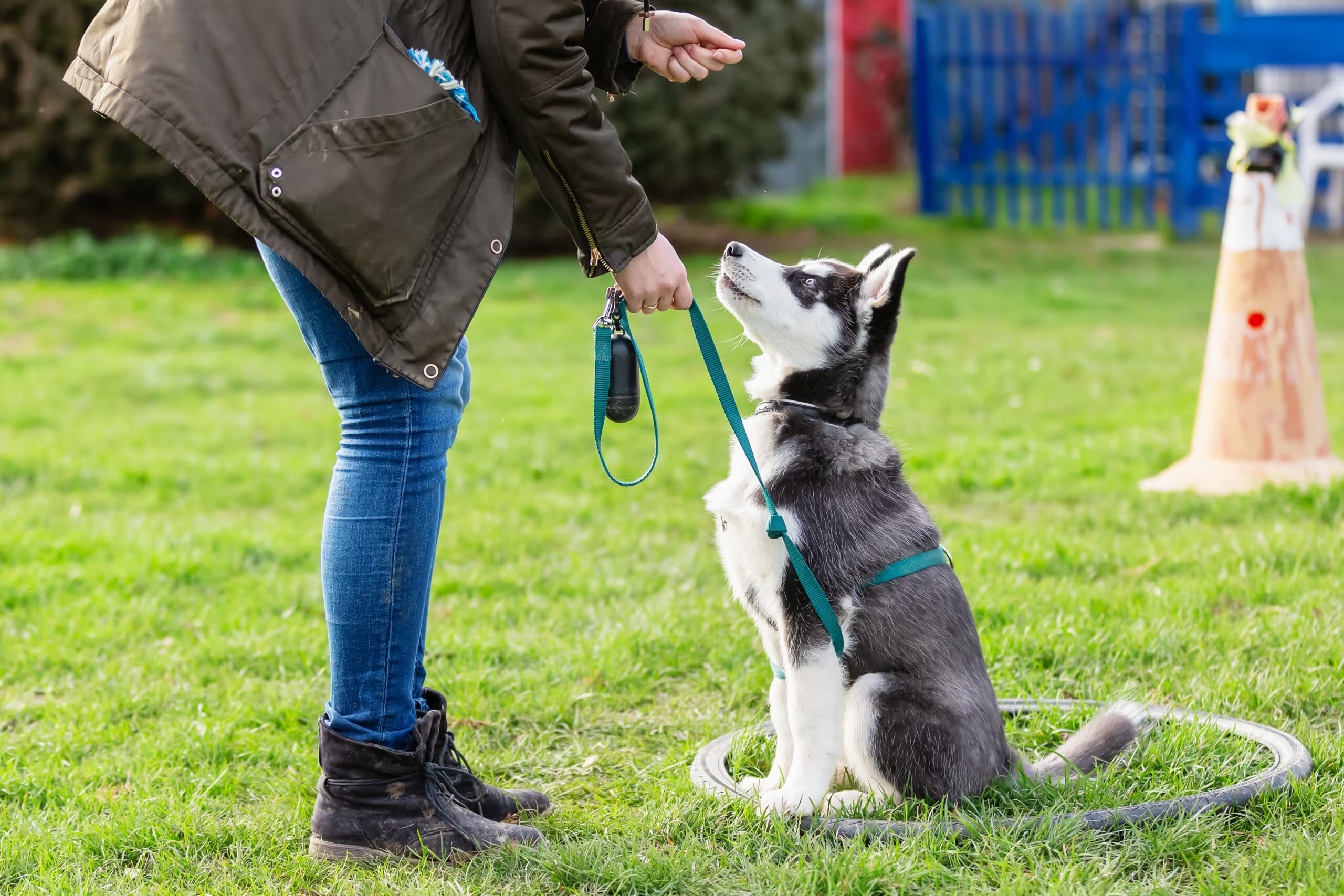
Before diving into training your dog to be a therapy dog, you should first determine if this is the right path for your pup. Consider your dog’s temperament:
- Do they enjoy interacting with strangers, or do they take time to warm up?
- Are they confident in new situations, or do they find sudden or strange movements and noises frightening?
- Are they able to remain calm, or are they quick to become overly excited?
Because therapy dogs need to be able to interact with strangers who may be in wheelchairs or hooked up to constantly beeping machines, and they need to be able to do so in a calm but social manner, this job is not the right fit for every dog. Upon determining your pup has the traits they need to be successful (as well as that they would enjoy it), you can then find a therapy dog program where they’ll learn the skills and get certified.
The American Kennel Club (AKC) recommends that dogs pass the Canine Good Citizen (CGC) exam before registration. This exam focuses on ten key traits and tasks that teach your dog to be a well-mannered canine when out and about in our society. These skills will give your dog a strong foundation that goes a step beyond basic obedience, making therapy dog classes a piece of cake! We’ve covered each of these tasks and have linked a helpful video to get you started below:
Training and Preparing Your Dog for The AKC Canine Good Citizen Test.
It’s important to note that while these CGC skills aren’t formal requirements for your dog when becoming a properly trained therapy dog, they are strong recommendations that test for skills your dog will need to get through training and certification. Your dog might not have “straight A” passing marks on this checklist (yet), but trainability is the most important characteristic of a therapy dog. So if your dog lacks a skill but is trainable, they may be just fine with some patience and practice.
1. Accepting a friendly stranger
Passing this portion of the test means your dog will allow a friendly stranger to approach and speak to their owner in a natural, everyday situation. This skill is included because therapy dogs will often be approached by people they don’t know, whether on the street or in a facility, and during this situation, the dog needs to remain calm even if they’re distracted or stressed.
2. Sitting politely for petting.
Since one of the benefits of therapy dog interaction is the ability to cuddle or pet the dog, it goes without saying that your dog will need to be able to accept these interactions without becoming fearful or overly excited.
3. Allowing appearance and grooming checks
You may be asking yourself why this matters in a therapy dog setting. After all, many perfectly lovely dogs hate going to the vet or getting groomed. The purpose of this skill is not so much about the medical nature as it is about invasive handling. Not everyone who meets your dog is going to interact with them in a respectful or mindful way, and while your dog may put up with you hugging them, they may not tolerate that from a stranger. Your dog’s ability to remain calm and accepting in a situation that may not be their favorite is an important one for therapy dogs.
4. Walking calmly on the street
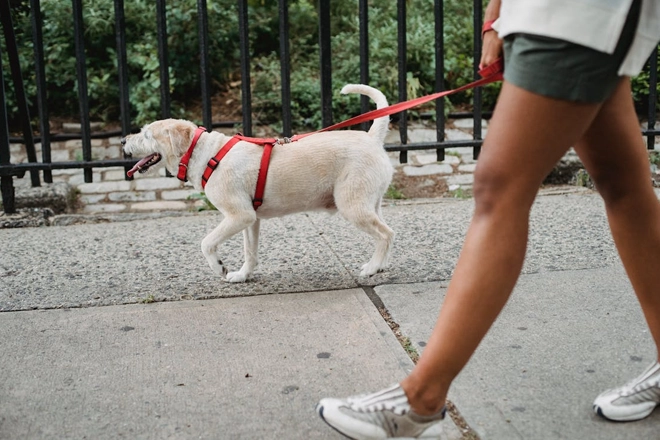
Polite walking skills are key to keeping both therapy dogs and their owners safe. Evaluators will check to see if your dog will walk politely on a loose lead with you or another trusted handler. They’ll check to ensure that your pet doesn’t pull on the leash, or become reactive, barking and lunging at people or other dogs. This is especially important since other therapy dog teams may be doing the visits alongside you.
5. Walking calmly in a crowd
This evaluation tests to see if a dog can walk through crowds of people with calmness and confidence, testing their ability to remain focused in distracting or packed areas.
6. Sitting and staying
Being able to hold a position, whether it’s during an interaction or while waiting for one, is a key skill for therapy dogs. Your pup should not only know skills like sit, down, and stay, but they should be able to hold them with distance, duration, and distraction.
7. Coming when called
A good recall is never a wasted skill, and therapy dogs are no exception. In this test, the evaluators will determine if the dog will come when called by their owner from at least ten feet away on a long leash. This ensures that the dog has the attention span and capacity to come when called, even when distractions or distance are present.
In addition to commands like “come,” therapy dogs should respond well to the “leave it” and “drop it” commands, particularly as they will be in unfamiliar environments and exposed to potentially dangerous things. Being about to respond to these cues quickly could save their life if they pick up a fallen pill or leftover snack.
8. Reacting positively to other pets
Evaluators will check to see if the therapy dog candidate will behave politely around other dogs. During the test, two handlers and their dogs must approach each other from about 20 feet away, stop to shake hands, and exchange pleasantries while their dogs wait patiently. It’s worth noting that your dog doesn’t need to enjoy interacting with other dogs. They just need to be able to remain neutral around them.
9. Reacting calmly to distractions
The evaluator will select and present two distractions to which the dog must react properly. Properly, in this case, means that the dog won’t fixate, bark excessively, or show fear. Instead, they should react with nonchalance or acknowledgement, and then redirect their attention to their owner.
10. Reacting positively to separation or being left with a stranger
Evaluators conduct this test to see if the dog can be successfully separated from their owner when left with a trusted person. The evaluator will hold the dog’s leash while the owner goes out of sight for three minutes. They will then observe the dog’s behavior over this time, looking to see if the dog is able to remain calm and focused on them as the handler, rather than where the owner went.
If your dog can pass the CGC test, there’s a good chance they’ll be approved as a therapy dog. Once they pass, take things slowly. Practice with friends and family members to help your pup practice the skills in different environments before diving into more formal therapy visits (or those with more factors). It’s harder to rebuild your pup’s confidence back up if you push them too far, than it is to slowly build them up. You want to make sure you’re setting them up for success so that you can have a long run in the therapy dog game.
Assessing yourself to be a handler
Determining if your dog is a good candidate to be a therapy dog is only half of the puzzle; and you’re the other half! In dog training, we often joke that training the human is the hardest part, and it’s true. As your dog’s handler, you need to be able not only facilitate the interactions but also keep them safe.
Would you be a good handler? Here are some characteristics and skills to check for:
1. You’re patient.
Training a dog (and yourself!) can be tough work. Some tasks may be easier for you and your dog to pick up on than others. Remember when you’re training to end on a high note - if you find you’re starting to get frustrated, take a step back, do a few reps where it’s easy enough for you and your dog to succeed, and then call it a day. You’ll both be more eager to dive back in when your last session ended with you feeling good.
2. You’re kind.
It’s hard to imagine someone doing therapy visits if they don’t care about people. Bringing a positive and warm energy with you to visits will do as much good for those you’re visiting as your dog will. It’s also important to have a certain amount of empathy if you’re doing these visits. Sometimes when people are not in a good place (mentally, medically, physically), they have walls up. These are often the people who need you and your therapy dog the most.
3. You’re resilient.
While some visits therapy teams attend employee appreciation days or midterm study breaks for college students, others go into hospitals to visit with sick and sometimes terminal patients, elderly folk with memory loss, and other people who have been through some form of trauma. In spending time focusing on uplifting others, especially those going through a hard time, it’s important to remember to take care of yourself. Familiarize yourself with the signs of compassion fatigue, and take steps to ensure that you fill your cup so that you can fill others’.
4. You’re observant.
In going to new environments and interacting with new people, it’s important to be aware of what’s going on around you to ensure the comfort of whoever you’re visiting, as well as the safety of you and your dog. Not everyone you visit will be comfortable with dogs, and being able to navigate those interactions respectfully will be a part of acting as a successful therapy team.
Additionally, while your dog may enjoy visits, you need to be mindful of when they’re beginning to show signs of stress, or when their boundaries are being pushed. While therapy dogs are expected to have a high tolerance and not resort to aggression or flight in new situations, the alternative is that they look to you as their handler to get them out of situations that aren’t good for them.
5. You’re confident.
You know what you and your dog need and expect, and you’re not afraid to communicate that to others. As we mentioned above, the handler is responsible for advocating for their dog and keeping them safe and happy. You’ll also need to be prepared to cold call or reach out to organizations and facilities you don’t know in order to get visits rolling.
If you’ve gotten through these criteria for you and your pup and believe that becoming a therapy dog team is the right fit for you, your next step should be to schedule a vet appointment for your pup. Though your dog may appear healthy, it’s important to make sure they are up to date on their vaccines and parasite prevention—not only will many training classes and facilities you’d visit require proof of this, but you’ll also want to make sure your pup can’t give or contract anything when around immunocompromised people or other dogs.
Once you’ve completed this, then it’s time to dive into certification and therapy dog training. Start by joining a national or local group. You’ll gain valuable insight and mentors, as well as resources to get started. Many groups will even set up the visits for you; all you need to do is show up. The AKC’s Therapy Dog program is a good place to start, but other options exist, including local dog trainers and online training classes. Be sure to choose trainers that have CCPDT certification, which guarantees that your pet will be put through fear-free training.
In choosing to become a therapy dog team, you’re opting to take your relationship with your dog to the next level. Executing therapy visits and bringing a smile to the face of someone in need is incredibly rewarding, and the deep level of communication and trust you build with your dog throughout the process is just as impactful.
Frequently asked questions
How can I train my dog to be a therapy animal?
There are plenty of programs out there that can help your pet to become a certified therapy dog. Before starting those, however, it’s generally recommended to do a few self-assessments for both yourself and your pet. A good place to start is with the AKC’s Canine Good Citizen test, which determines if your dog has the temperament and capabilities needed to be a successful therapy dog.
How long does it take to train a dog to be a therapy dog?
Every dog learns differently, which means that your training phase can vary in length. On average, most therapy dog training programs run for six to eight weeks.
What commands do you need to teach a therapy dog?
Basic obedience commands such as sit, stay, down, leave it, and come, are all important foundational skills for therapy dogs.
Will my dog make a good therapy dog?
In order to determine if your dog has what it takes to be a good therapy dog, consider their temperament. Dogs that are trainable, social, friendly, calm, and confident are more likely to make good therapy dogs.
What is PSA training?
PSA training is for dogs who will be psychiatric service animals, or PSAs. This type of training helps them to identify mental health conditions or symptom flare-ups for psychiatric conditions, such as anxiety and bipolar disorder, depression, obsessive-compulsive disorder (OCD) and post-traumatic stress disorder (PTSD). PSAs are categorized as service animals, and thus are afforded all of the legal protections as other service dogs under the ADA.