The etiquette of dining, shopping, and exploring with your dog
Public manners for dogs start at home. From training and prep to boundaries and calm resets, learn how to explore, dine, and shop politely with your pup.
Summary
- Train, train, train — Training your dog before public outings helps them behave calmly and keeps others comfortable.
- Plan ahead — Packing the right gear and planning ahead makes every dog-friendly restaurant, shop, or trail more enjoyable.
- Respect others’ space — You love your dog, but not everyone wants to be jumped on or run up to by your pet.
Bringing your dog into public spaces is one of the best parts of modern pet parenthood, and hotels, stores, and restaurants are rolling out the welcome mat for pups now more than ever. But great outings start long before you clip on the leash and hit the town. Training, preparation, and awareness make the difference between stressful side-eyes and compliments from strangers.
1. Training is key
Good manners in public don’t happen by accident. Dogs who understand basic cues (sit, stay, come, etc.) can navigate busy patios, stores, sidewalks, and trails without getting overwhelmed. Training also gives you a shared communication system when distractions spike, which will happen plenty when out in public.
Start with short, controlled practice sessions at home with as few distractions as possible, then gradually increase real-world exposure. If your dog tends to be nervous around strangers, consider using a leash or harness tag that signals they need space. This helps set expectations without a conversation every time someone reaches out for a pet.
2. Come prepared
A smooth outing depends on what you bring. Waste bags are the universal symbol of responsible pet parenting, so try not to be caught out without them, but comfort tools matter too. A thirsty dog on a long walk might whine or pull if they can’t access water, so a collapsible bowl keeps them regulated and treats aren’t just snacks; they’re a way to reinforce calm behavior in the moment.
Other items like weather gear (think booties or coats) protect your dog, but also prevents public disruptions caused by discomfort. Bring wipes for paws or quick cleanups, and always use a secure leash in shared spaces.
3. Plan ahead
Dog-friendly doesn’t always mean it’s pet-perfect. Researching destinations helps you avoid loud areas, unsafe surfaces, or crowded areas that could stress out your dog. When choosing restaurants, look for patio spacing, shaded seating, water access, and clearly stated pet policies. For stores, confirm they allow leashed dogs and have enough room for them to walk without brushing against displays or people. Planning walking routes ahead of time keeps your dog mentally balanced and helps you move confidently through the outing without that constant worry.
4. Respect those around you
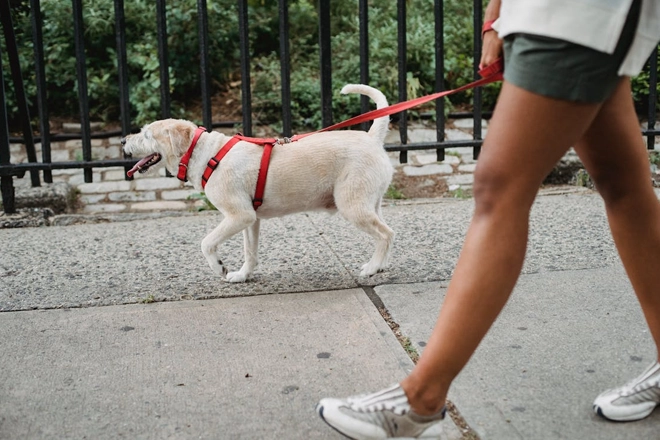
Loving dogs and wanting a surprise dog greeting are two totally different things. Give others space by keeping your dog’s leash short, skipping retractable leashes in crowds, and asking for permission before allowing interactions.
Vaccines are a key part of etiquette too; a healthy dog protects other pets and people. Plus, you’ll want to watch body language from both your dog and those nearby and remove your pet from situations that teeter towards discomfort or aggression.
A polite pet parent advocates for their dog while honoring others’ boundaries, keeping shared environments calmer and more predictable for everyone.
How to handle unexpected situations
Even the most well-trained dogs can get overstimulated. If your dog reacts to another animal, person, or inanimate object, guide them to a quieter reset area. Use a cue they already know well and reward the moment they re-engage with you. Most importantly? Stay calm.
Familiar comfort items from home can help them decompress quickly. If a small incident affects someone else, a brief apology and a confident reset shows leadership. The goal isn’t perfection, it’s recovery with clarity and calm direction.
A great day out with your dog isn’t about perfection, it’s about preparation and partnership. When training starts early, your bag is packed with thoughtful essentials, and you move through public spaces with awareness, outings become easier for both of you. With consistency and a little planning, you and your pup can explore your town confidently and safely.
Frequently asked questions
What is a red flag dog behavior?
Watch for lunging, snapping, or leash aggression. Stealing food, guarding, or ignoring known owner cues are also red flags to be aware of since these moments can put pets or people at risk, so they’re worth addressing early.
Can I take my dog into public?
Yes. But it works best when your dog understands basic cues and stays leashed. A calm, trained dog makes outings safer and more enjoyable for everyone, including your pup.
What major stores allow pets?
Many outdoor retailers and garden centers are known for welcoming leashed dogs. Some larger chains allow pets, too, but policies vary by individual location and manager. When in doubt, call ahead. Rules can change, and not all stores with open doors have dog-friendly layouts.
What are the 5 D’s of dog training?
Distance, duration, distraction, difficulty, and diversity. Practicing these intentionally helps dogs generalize commands outside the home. It’s how training becomes behavior, not just repetition.
What is the hardest command to teach a dog?
For most dogs, reliable recall is the biggest challenge. Not because it’s impossible, but because distractions compete hard for attention. A dog who returns every time, even in exciting or busy environments, has reached a major training milestone. It takes patience, practice, and smart progression.