

Pug: Dog breed characteristics & care
Characteristics, care tips, and other helpful information for pug owners

Summary
- Breed group – Toy
- Height – 10 to 14 inches
- Weight – 14 to 18 pounds
- Coat length & texture – Double-coated, short and smooth
- Coat color
- Typically fawn-colored or black. Fawn colors can include a variety of glossy tints, such as silver or apricot. In some rare cases, pug coats may be brindle-colored.
- Pugs also have clearly defined markings and a trace of black in their fur.
- Exercise needs – Low to moderate; about one hour per day
- Intelligence – High intelligence
- Barking – Typically low-volume barking to communicate
- Life span – 12 to 15 years
- Temperament – Gentle, charming, even-tempered and at times, stubborn
- Hypoallergenic – No
- Origin – China
Looking for a little dog with a long history? The Pug might be the breed for you! Keep reading to learn more about this adorable breed.
Pug fun facts
👉 Coming up with a pet name can be fun but tricky. Search no further! According to PetScreening’s 2024 database, the majority of our users name their male Pugs Frank; Milo is the 2nd most popular male name. Meanwhile, most of our users with female Pugs love Bella, then Luna.
- They’re a royal breed. These toy dogs originated in China, where they were adored by Chinese emperors. Later, royal families in Japan, Russia, and England found themselves charmed by the Pug, too.
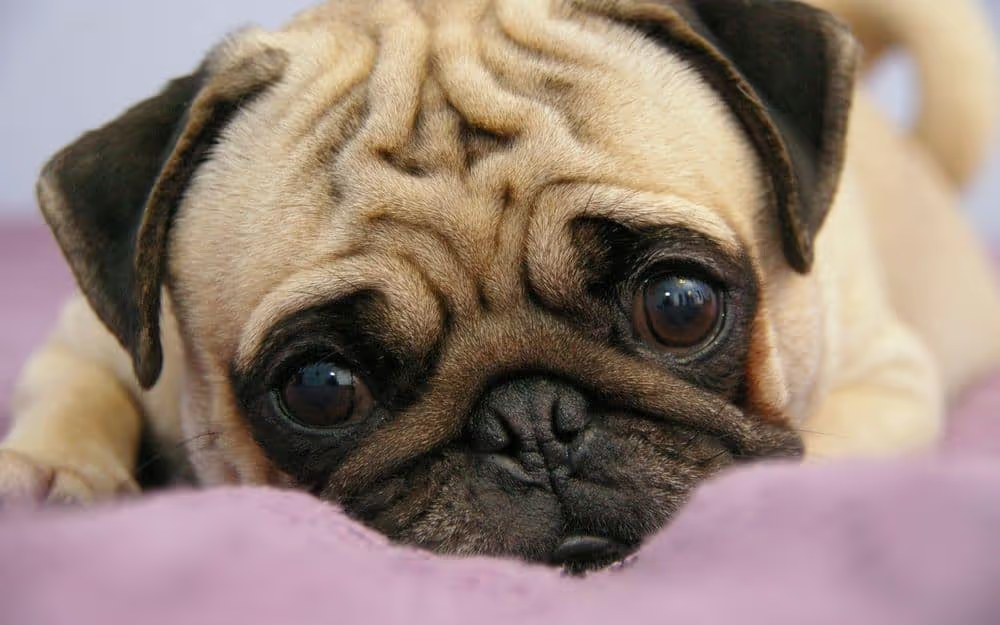
- Chinese breeders actually bred Pugs to have those adorable wrinkled faces. In fact, they suggested that if you look closely at their foreheads, the wrinkles will often form the Chinese symbols for the word “prince.” (王)
- Artists love ’em. Famous 1700s artists William Hogarth and Goya have portrayed these beloved dogs in many of their renowned paintings.
Pug temperament and characteristics
Every dog’s personality is unique, but in general, Pugs are considered a smart, playful, gentle, and even-tempered breed that thrive in an environment with ample human interaction. They may be stubborn at times, but are typically very kid-friendly and have been known to bond with infants. Pugs also tend to get along with other animals, cats, and strangers, but may be reserved or become aggressive when not properly socialized and trained.
Common Pug health problems
As a new Pug parent, it’s essential to know that the features that make your dog so adorable may in fact lead to an assortment of health issues. That squished-up face, those cute little wrinkles, and even the curly tail all have some downsides. Here’s what you should know about the Pug’s most common health problems:
Dental disease
Pugs are more likely to have problematic dental health because their teeth are typically overcrowded, entrapping food and leading to tartar and bacterial buildup, which can ultimately progress into gum disease. Regular dental cleanings administered by a professional under general anesthesia are recommended for preventative health.
Respiratory problems
Pugs are susceptible to a variety of breathing issues, including brachycephalic obstructive airway syndrome, a set of upper airway abnormalities that affects breeds with short skull bones. Breeders have long prioritized the appearance of such short-nosed dogs and neglected their medical needs. Dogs with respiratory conditions tend to breathe through their mouths and experience noisy breathing and snorting.
Affected dogs may also cough, gag, and vomit, and they are especially prone to overheating. Secondary problems, such as inflammation in the airways, are common.
Pug myelopathy
This progressive neurological autoimmune disease, similar to some forms of Lou Gehrig’s Disease in humans, but different from the condition known as degenerative myelopathy, begins in the spinal cord and slowly progresses to hind limb weakness and, in some cases, may result in paralysis.
Though Pugs with the condition may not experience pain, it’s imperative to look out for symptoms like ataxia (or difficulty walking), incoordination, loss of bowel and urinary control and a low tail carriage. There is no consensus among neurologists about the best way to treat it. Surgery may be recommended in some cases.
Necrotizing meningoencephalitis (NME)
NME is a fatal disease affecting the central nervous system. Recent evidence suggests it affects many small breed dogs, including Pugs. Typical signs include severe seizures, blindness, cervical pain, decreased consciousness, fever, weakness, and ataxia. Pugs with NME are most commonly young adult females.
Skin infections
Pug wrinkles may be cute, but when their folds are neglected, they can trap moisture and dirt, potentially leading to uncomfortable skin conditions, including chafing and bacterial or yeast infections. Early signs of infection include a strong or foul odor, excessive scratching or licking near the area, as well as irritated or inflamed skin.
Cost of caring for Pugs
Pugs are generally affordable as they don’t require much food or intensive grooming — and you probably won’t even have to hire a dog walker for this low-maintenance breed. However, if your Pug suffers from certain health conditions, including respiratory or spinal problems, you may notice vet bills in the thousands. To reduce such out-of-pocket expenses, consider signing up for pet insurance and/or creating a pet budget.
History of the Pug
Most historians believe that the beloved short-nosed, wrinkle-faced Pug originated in ancient China, with roots dating all the way back to 400 B.C. These toy dogs, primarily bred for companionship and amusement, were considered a sign of wealth. They often belonged to Chinese emperors and even had their own soldier guards, according to the Pug Dog Club of America.
Pugs didn’t gain popularity in the West until Dutch traders brought them to Holland, and eventually to England, where many of Europe’s monarchs fell in love with the breed as we know them today. In 1885, the American Kennel Club first recognized the Pug and sparked a national interest in the breed, one that continues to grow.

Caring for your Pug
Caring for a new puppy of any breed can be overwhelming. To start, you’ll need to schedule your first trip to the vet and keep track of your dog’s vaccinations. Before bringing your new bud home, be sure to puppy-proof your home. Here’s what else you can do to care for your new curly-tailed, flat-nosed goofy Pug pal:
- Clean those wrinkles. Your Pug’s wrinkles can easily trap moisture and dirt, making it a prime environment for bacterial or yeast infections. Use unscented canine facial wipes or, for visible dirt, a gentle, damp cloth paired with vet-approved, alcohol-based products to keep your pup comfortable and clean. Coconut oil or wrinkle balm work well. Be sure to avoid contact with eyes!
- Look out for common signs of Pug myelopathy. Though Pugs with the progressive neurological autoimmune disease may not experience pain, it’s imperative to report symptoms, such as ataxia (or difficulty walking), incoordination, loss of bowel and urinary control, and a low tail carriage, to your vet.
- Keep your pup nice and cool. As a short-nosed or brachycephalic breed, Pugs are especially prone to overheating. Be sure to check the temperature before walks, and ensure your Pug is hydrated and protected during the warmer months. You should also opt for a harness that doesn’t apply pressure to their necks as some may further compress your pup’s airways.
- Watch their weight. Prone to obesity, this comparably lazy breed will need you to keep an eye on their food intake. Always consult your vet before adopting a new diet plan.
Exercise
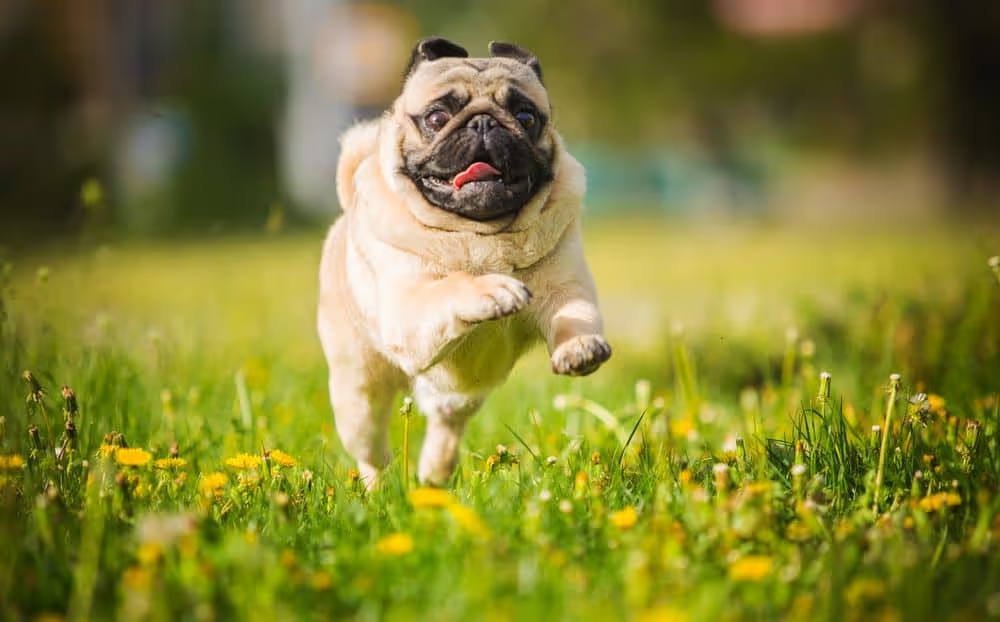
Pugs don’t require much exercise, but an hour of exercise per day consisting of two 30-minute walks should keep this low-maintenance dog and its small, sturdy frame nice and fit. Because they have such minimal exercise requirements, Pugs are generally ideal for most households.
Note, however, that these dogs are prone to overheating. Be sure to check the temperature, and ensure your Pug is hydrated and protected during the warmer months. You should also avoid using a choke collar and opt for a comfortable harness for leisurely dog walks.
👉 Browse our best dog collar article for in-house tested collars that you’ll love for your pup!
Grooming
Though your Pug’s short and smooth double coat doesn’t require a lot of maintenance, you’ll want to use a medium-bristle brush or mitt every week or so to help with frequent shedding and get rid of loose hairs. Pug puppies tend to shed more as they start to transition out of their puppy coats around three months of age. Nails should also be trimmed, debris around eyes frequently wiped, teeth brushed and skin folds should be kept as clean as possible as they can harbor infections.
Diet and nutrition
Pugs may not require much exercise, but it is imperative that new parents keep a close eye on their nutrition and help keep obesity at bay. Consult your vet if your dog starts to gain too much weight before implementing a specialized diet plan. In general, a healthy adult Pug should be eating approximately ⅔ to ⅘ of a cup of food per day, not including treats.
Training your Pug
New Pug parents can breathe a sigh of relief, because Pugs are generally considered smart and trainable breeds, though their stubborn streaks may prove challenging. You can use expert tips to guide you as you begin to house train your new family member. Keep in mind that Pugs do best with reward-based training and trick training, and they love to follow and please a confident teacher.
Breeds similar to the Pug
Not quite sure that this breed is right for you? Even if you are, it’s worth taking the time to research and consider other similar breeds. Here are a few to get you started:
- Boston Terrier. This social, playful and intelligent non-sporting group breed also dons a short and smooth coat, but requires moderate exercise.
- French Bulldog. Frenchies are another small but stocky breed. They require moderate exercise and love to be around their humans. It’s important to note, however, that French Bulldogs tend to have even worse brachycephalic issues than Pugs, as well as back problems.
- Brussels Griffon. This loyal toy breed averages 8-10 pounds in weight and is full of personality.
Frequently asked questions
Is a Pug a good house dog?
Yes, Pugs are typically very kid-friendly and tend to get along with other animals, cats, and strangers. They may, however, become aggressive when not properly socialized and trained.
Is a Pug a lazy dog?
They can certainly be lazy. Pugs require minimal exercise and are especially prone to obesity.
What is the life expectancy of a Pug?
Pugs have an average lifespan of 12 to 15 years.
Are there different kinds of Pugs?
Pugs can come in a few different coat colors including fawn, black, silver, and apricot. However, they all share the iconic round head, adorable wrinkles, curly tail, and endearing eyes.


