10 things you can do with your high-energy dog
Having a high-energy dog can make you feel like you’re running on a treadmill that won’t slow down. Here’s how to mellow your dog out just enough that you can keep up.
Summary
- It’s not just the breed — While some breeds are more prone to high energy or drive, your dog’s energy is impacted by other factors such as age, environment, and chemistry.
- Don’t forget the brain — Exercise and playtime are both important outlets, but making your dog think and use up mental energy is just as, if not more, important.
- Determine if it’s high energy, anxiety, or arousal — While exercise is a part of keeping a high-energy dog satiated, it can make things worse with a dog experiencing anxiety or arousal.
Whether it’s your new pup or your long-time family dog that can’t sit still, it’s normal to want your dog to settle so you can have a moment to breathe. Many people anticipate some version of this challenge with stereotypical ‘high energy’ breeds, such as a German Shepherd, Belgian Malinois, or Border Collie; it’s all the other dogs that catch them off guard. Maybe you’re reading this and thinking, “but I don’t have the energy to run around with my dog” or “I don’t have time to enroll in classes.” The good news is that there are a variety of ways to burn off your dog's energy, ranging from a lot of effort and time on your part to very little!
1. Food enrichment
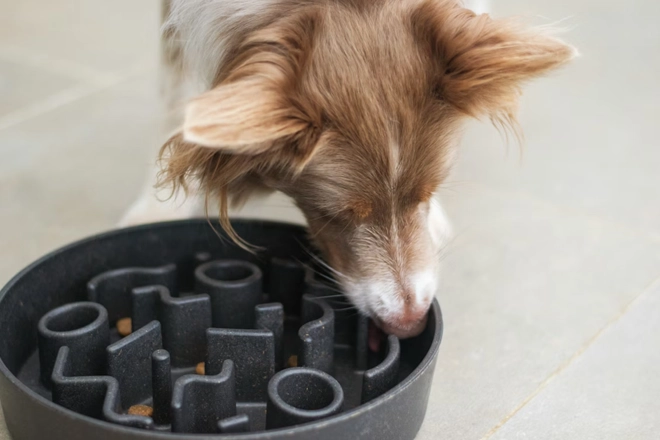
Working your dog’s brain is just as beneficial, if not more, to physical exercise. According to the Canine Welfare Science Center at Purdue, enrichment is “changing an animal’s environment to promote behavioral and physical wellness.” These activities can target any of your dog’s senses, and what’s great about enrichment is that it can be implemented at minimal financial cost or effort to the pet owner.
One of the easiest ways to add enrichment to your dog’s routine is by choosing to nix feeding your dog out of a bowl, and instead opt for some method that makes them work for their meal. Puzzle feeders and kongs come in a variety of difficulty and durability levels, and if your dog figures one out too easily, you can always level up!
“Puzzle feeders are great for dogs who need to be distracted from specific behaviors, or dogs that eat too quickly. They are also a great idea for large deep chester breeds who can be prone to bloat.” - Dr. Dwight Alleyne
2. Agility training
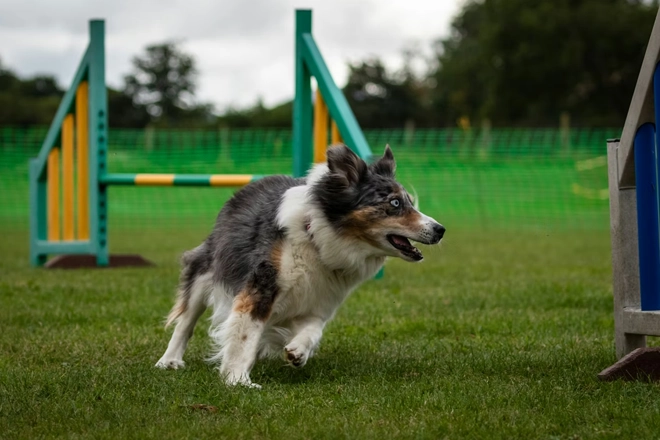
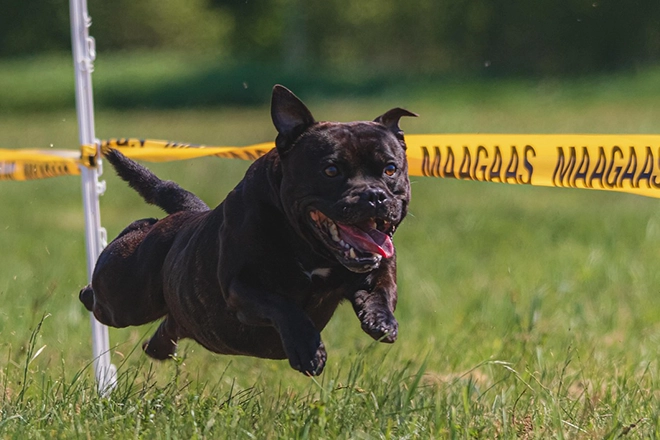
An activity that’s just as fun for the dog owner as the dog is agility training. This outlet requires the owner to work with their dog to get them through an obstacle course, sometimes while timed. The American Kennel Club holds competitions surrounding this sport, as do many local dog training clubs. Success relies just as heavily on the dog owner as on the dog; communication between the two can mean the difference between first place and last.
This is just one of the reasons that agility work is beneficial for puppies and young dogs. In addition to creating a deeper bond between dog and owner, the different surfaces and levels a dog must maneuver can help build confidence that young dogs can take with them out into the real world.
If you’re considering implementing agility training into your pup’s routine, make sure to check with your veterinarian first. Agility courses contain a variety of surfaces and pieces of equipment that would require the dog to climb, jump, and/or crawl, sometimes at high speed, so physical fitness is a must.
If your pup has arthritis or some other physical medical condition, your veterinarian may recommend working with your dog on a specific obstacle that won’t increase their risk of injury or skipping the competition element entirely. Additionally, because completion of many courses requires intense physical exertion, brachycephalic dogs should avoid participation in these activities in the heat.
3. Hiking
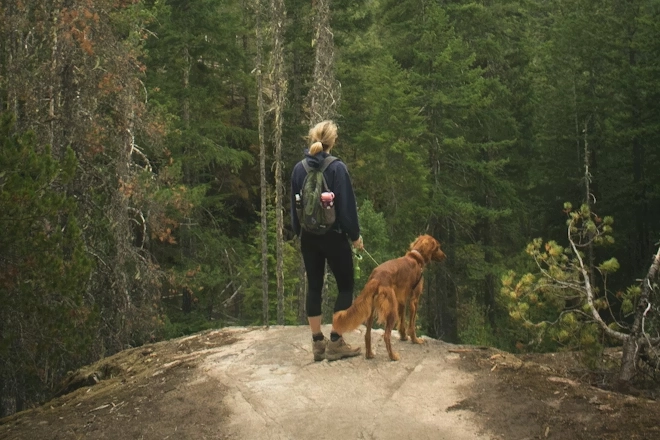
If your perfect day off includes spending time in nature, opt to take your dog with you next time! Hiking can be as good for your pup’s health and energy as it is yours, and you’ll be able to check both boxes at once. Not only will they be testing their balance by navigating tough terrain, but they will be working important muscles on the inclines and declines.
Prefer an even stroll to an uphill climb? Your dog can benefit from that too! Just remember to let your dog stop and sniff along that way. It may seem like Fido is suspiciously interested in that tree trunk, but don’t forget that dogs get the best read on the world through their nose. Think of it like their version of Facebook; they’re learning about who was there before them and what was going on with those animals, which provides valuable mental stimulation.
👉Quick tip: Make sure to check the conditions PRIOR to taking your pup out. Keep in mind the air temperature, if the pavement is hot, if there’s ice (or salt) on the road, etc. It also helps to plan your route ahead of time; you’ll want to know if your route will take you in shaded areas on a hot sunny day, or rough terrain the day after a heavy rainstorm.
4. Obedience training
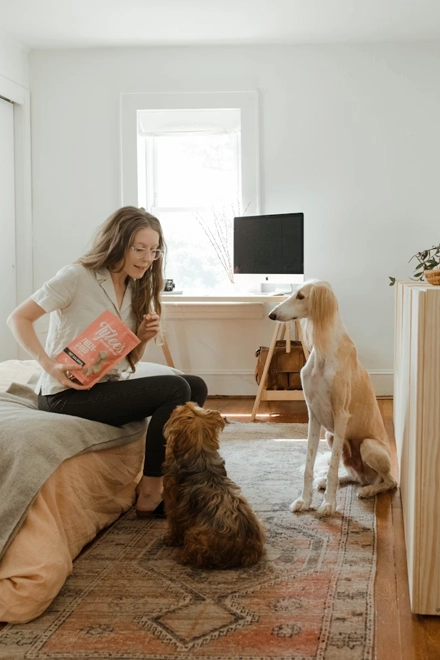
Often thought of as something dog owners do to get their pup to behave, obedience training is an outlet for your pup that’s wildly underrated. In addition to teaching your dog what you do and don’t want them to do, you’re also getting them to flex their problem-solving skills - each time you ask your dog for a behavior, they have to try to figure out what you want; aka what will get them the reward.
Training your dog also requires communication and trust — it’s a great activity for bonding with your dog, whether they’re new to your home and you’ve been together for years. And if you’ve already done the basics, there’s always something new you can work on together.
Short on time? No problem! With obedience training, a little goes a long way. Studies have shown that shorter training sessions allow the dogs to better retain the information. This also relieves the dog owner from feeling pressured to commit a long period of time, making them more likely to perform the training sessions consistently.
Unlike hiking or agility work, obedience training doesn’t need to be physically challenging for your pup (or you!), making it a good choice for dogs who have physical ailments. Just make sure to talk to your vet about how to prevent your dog from gaining weight or upsetting your pup’s stomach if you’re using food as the reward.
For pups where food isn’t an option, figure out what else your dog sees as a valuable resource. Every dog is different and has different things they’re willing to work for; just like one person’s favorite food is chocolate while another’s is pizza. Maybe they love tennis balls, or can’t resist a scratch behind the ear. Focus on what YOUR dog likes, and by using that as your reward, your training will be much more effective.
5. Bike riding
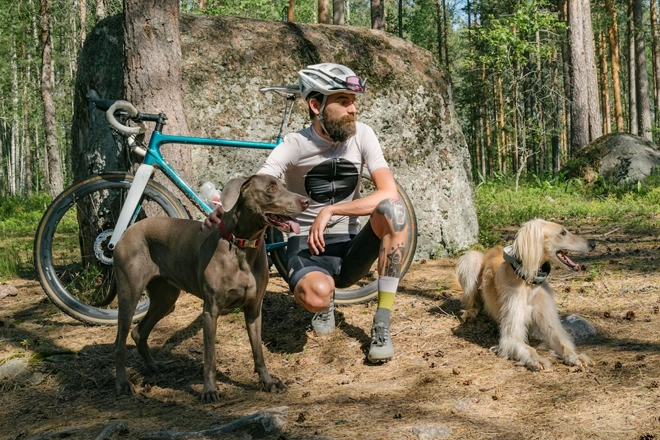
As with hiking, biking can be a hobby that you share with your dog if they like to run. However, since you’re adding in an additional factor (the bike), there are some important things to consider.
First, you’ll have to get your dog used to being around your bike while it’s moving, before you can begin to truly cycle. It’s not uncommon for dogs to be nervous around bicycles and other wheeled gadgets, so don’t force it—if your pup has an extreme response to the bike moving, you’ll have to take it slow and build their confidence, or opt for a different outlet.
Once you’ve gotten past the initial acclimation period, make sure to put safety first. Invest in an appropriate leash and collar, and make sure to have water with you for the ride. Keep your pace slow and steady, and take frequent breaks. And of course, be mindful of the weather and terrain; you’re removed from the ground, but your pup’s paws aren’t, so advanced planning can protect you both from serious injuries. Because of the physical nature of this activity, we highly recommend consulting your veterinarian prior to taking your dog on your next bicycle excursion.
6. Scent work
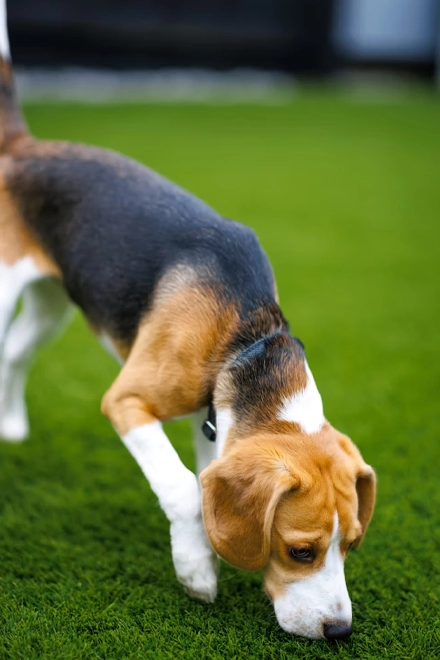
Whether you’re looking to go all the way to competitions and join the local volunteer search and rescue group, or you just want to try out a new activity that will get your dog thinking, scentwork has something for everybody. At home activities can be as simple as hiding treats or toys under boxes and in bags and letting your dog find them. This route is very financially attainable.
If your pup continues to find tennis balls that you’ve hidden days before, or zooms through getting into that box for the treat, you may want to take it to the next level. The American Kennel Club holds classes and competitions where dogs learn to identify specific scents (generally oils like birch or clove) and then search and detect them.
Many dog owners enjoy scent (or nose) work due to its incredible versatility. Simply by changing the environment, you have a new challenge for your dog to tackle. This, combined with the ability for the job at hand to require more or less physical activity, makes it a reliable option for dogs of all ages and medical needs.
7. Doggie parkour
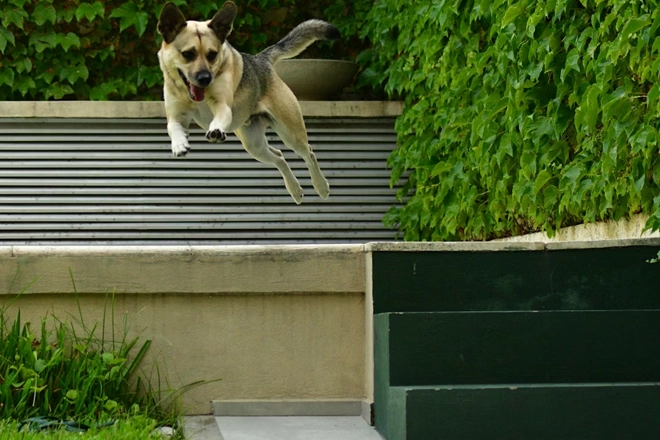
Agility’s younger and lesser-known brother, doggie parkour, has recently made its name in the arena of ‘fun things to do with your dog’. Similar to agility, parkour focuses on the dog and handler collaborating to combat obstacles that require a mix of jumping, climbing, and balance. Different from the world of agility, doggie parkour does not offer competitions, and instead focuses on the fun and skill of the sport; the goal is to build confidence and overcome new obstacles while emphasizing play.
If this sounds right up your alley, check out the International Dog Parkour Association, which offers webinars, classes, titling opportunities, and a database of certified instructors. Because this sport removes some of the speed and competition of agility, it’s more accessible to dogs of different ages and abilities. However, it’s important to talk to your veterinarian before getting started so that you can focus on skills that are appropriate for you and your pup.
8. Schutzhund training
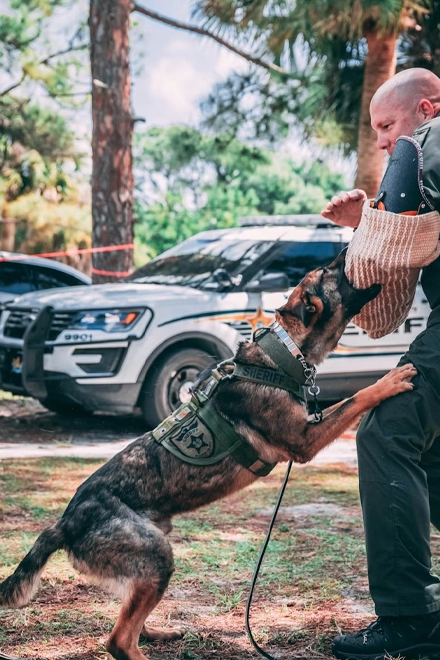
Schutzhund training was created in Germany as a way to assess a German Shepherd’s abilities. Over time, it developed into a sport that focuses on protection, obedience, and tracking, and dogs of all breeds take part. This form of training requires extreme precision and dedication, and takes time, skill, and financial resources. In exchange, both handler and dog become well-disciplined and skilled, acting as an inseparable team.
Commonly misinterpreted as ‘creating an aggressive dog’, Schutzhund training works to teach a dog to remain calm in stressful situations and to think through their response, rather than to quickly react.
9. Social enrichment

While not every dog enjoys interacting with other dogs, the ones who do reap great benefits from consistent social enrichment. Rather than simply getting the opportunity to run around in a yard to exercise, with dog-dog interaction comes mental stimulation and impulse control practice.
What’s nice about allowing your dog to have appropriate interactions with other dogs is that they learn much faster from each other than they do from us. Bite inhibition is a great example of this. When puppies (and puppies at heart) get the opportunity to mouth other dogs during play, they also get the opportunity to be corrected when they bite too hard. And it carries over to their play with you, saving you from having to work through teaching your dog not to bite when playing.
In addition, thinking about how to interact and respond to other dogs’ cues is a great brain exercise, while running around tires your dog out physically—it’s a win-win! Just make sure that your pup is up to date on vaccines and healthy, as are the other dogs, to avoid any spreading of illnesses between the group.
10. Lure coursing
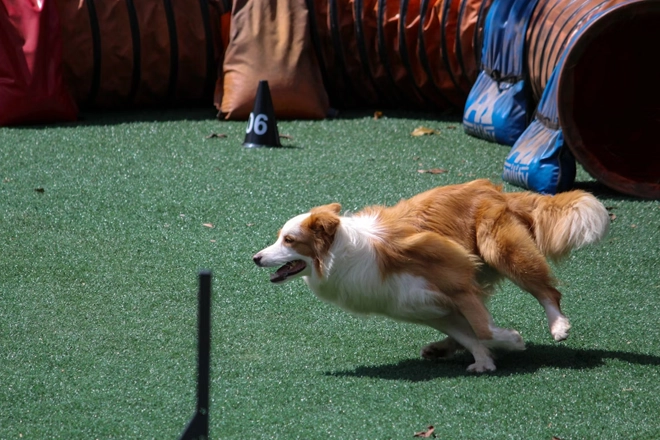
Does your dog enjoy chasing things? Do they have a high prey drive? If the answer to either of these questions is yes, you may want to try lure coursing as an outlet. This sport consists of the dog chasing a mechanically operated lure around a course, often full of different obstacles or agility equipment.
If you’re looking to try it out, search for a club near you where you can see how your dog does. While this exercise doesn’t require any particular skill, similar to agility or parkour, your dog will get better at it the more they practice, and you can opt to enter them in competitions. Want to keep it more low key? You can purchase your own lure course and set it up in your own yard so that you can run your dog through it anytime you like!
It can be frustrating when it feels like you have to constantly do more to keep up with your pup, and the idea of trying to tire them out after a long day at work can be daunting. The good news is that whether you have five minutes or two hours a day to dedicate to helping your dog expel energy, there’s something for everyone. Focusing on little swaps to your normal routine that will use more of your dog’s brain power, such as food enrichment, basic obedience, or nosework, will make this task easier and more time-effective. If you’re looking to dive into a more collaborative approach, consider trying out an agility class or doggie parkour.
If you’re not sure where to start or you find that none of these approaches help your dog land on a ‘simmer’, try talking to your veterinarian or a professional dog trainer.
Some behaviors that lead us to believe a dog is a ‘high energy dog’ are actually clues that they are experiencing anxiety or hyper-arousal, and may warrant a more structured behavior modification plan or medication to help you be successful.
Just remember that dog ownership requires a bit of trial and error, and you may need to implement a little bit of multiple outlets to help you and your dog get back on the same page. No two dogs are the same and your lifestyle plays a role. It's all about finding what works best for you and your pup.
Frequently asked questions
How do you keep a high-energy dog entertained?
The best way to keep your high-energy dog entertained and happy is to work both mental stimulation (food enrichment, nosework, basic obedience, etc.) and physical stimulation (running, hiking, agility, etc.) into their routine.
What is a daily routine for a high-energy dog?
Dogs thrive off of structure, so making sure you keep your dog’s routine consistent will help them understand what’s coming next. This, paired with some form of mental task such as feeding through puzzle toys or basic obedience, and some form of physical work, ranging from walking to biking, will help keep your high-energy dog happy.
What are the best mentally stimulating activities for dogs?
Feeding your dog their meals through food enrichment toys like puzzle feeders or kongs is an inexpensive and effective form of mental stimulation for your dog. Implementing short training sessions (5-10 minutes) with your pup is a mentally stimulating activity as well.
How do I tire out my high-energy dog?
A successful plan to tire out your high-energy dog will consist of both mental and physical exertion.
How often should a high-energy dog be walked?
High-energy dogs benefit most from at least 3 walks a day, timing in at 20 - 30 minutes each.