13 training tools for dogs (and what they do)
We break down the many types of training tools, from clicker training to toys, and how to choose which is best for your pup.

Summary
- The right tools make a difference — Having the proper supplies makes training easier for you and your dog!
- They offer encouragement — Sometimes your dog might be unmotivated or downright stubborn. Training tools help motivate them.
- Choose your tools wisely — Not every training tool is created equal and you’ll want to choose based on your dog’s training needs.
Whether you just brought home a new puppy or you’re looking to teach your long-standing canine companion some new tricks, being prepared is an important part of the process. That means having as many tools in your toolkit as you can, just in case you need them. Some of the tools we’ll discuss in this article fall more into the management category, but are just as, if not more, important in shaping how your dog interacts with their environment.
1. Collar/Martingale
The first piece of equipment that you’ll need for your pup is a collar. These can come in the form of flat collars or martingales. When most people think of collars, a flat collar is what they envision, or a single loop of material that remains in the same shape around your dog’s neck. Martingales are an alternative that have two loops and when your dog isn’t pulling, they’ll hang loose around your pup’s neck, and will cinch if your dog pulls or twists. These come in handy if your dog tries to back out of their collar or spooks easily, or has small ears or a thin neck, as the cinching makes it much harder for a dog to slip free. I recommend the ones with the quick-snap buckle—making it ideal for dogs with handling sensitivities or those who are hard to size. Keep in mind, these collars are not for training so much as a safety tool and shouldn’t be yanked on an attempt to stop pulling.
2. Harness
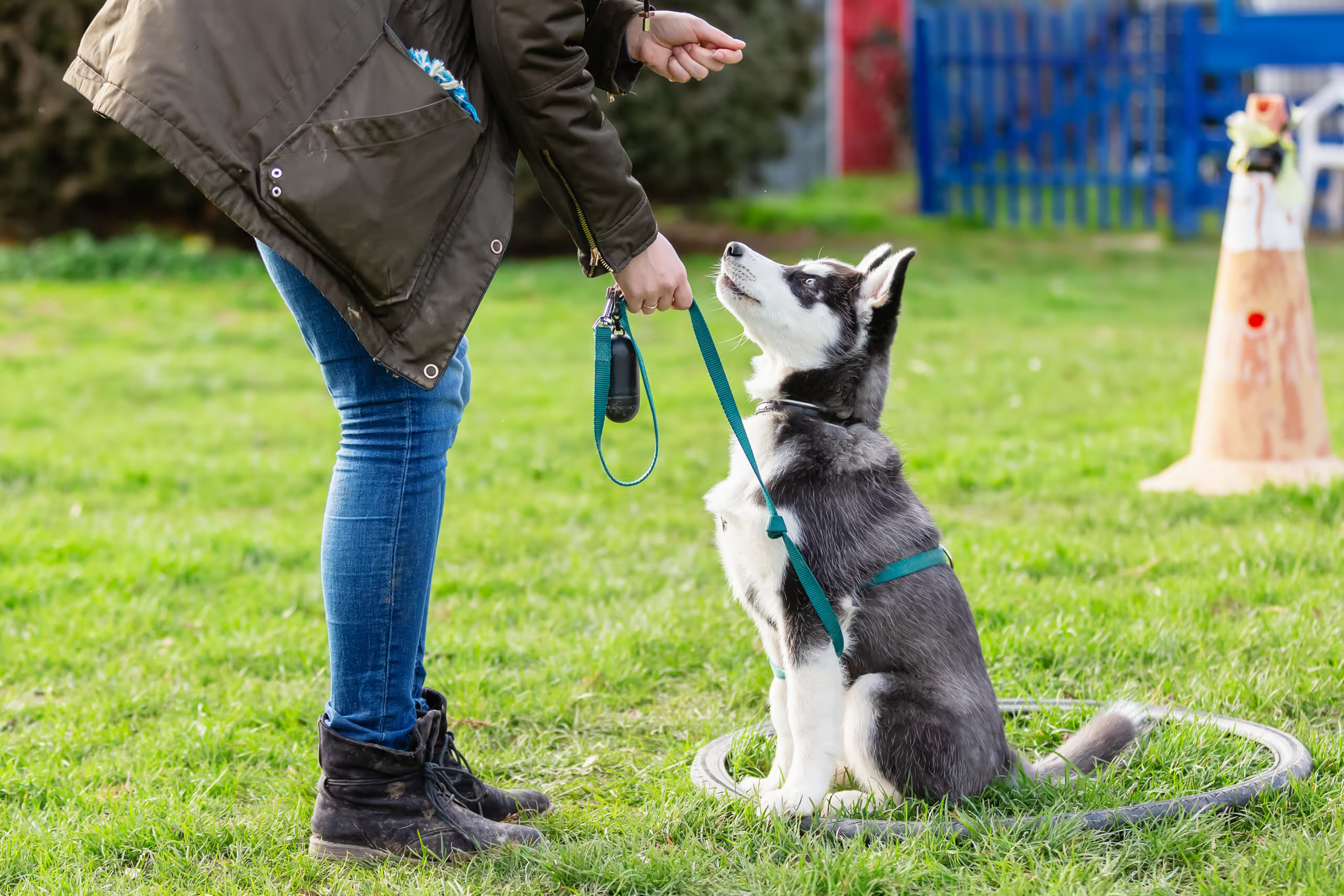
Harnesses are another tool that can be helpful with most dogs for a variety of reasons. The top two reasons you might want to try a harness are either your dog pulls on leash or they have neck or back sensitivities. The standard harness that many people use clips on the back. While this gives you a more secure handle on your dog, it’s not the best option if you’re trying to mitigate pulling. Instead, try a harness that clips in the front; that way, when your pup pulls or lunges, they’ll spin themselves back towards you rather than move forward away from you.
Opt for a PetSafe EZ Walk harness, which only clips in the front, or go with my preference, the Freedom No-Pull harness or a PetSafe 3-in-1 harness. The Freedom No-Pull and PetSafe harnesses have both a front and back clip, which when using a two-point leash, gives you even more control of your dog. If you opt to go with a Freedom No-Pull harness, I recommend purchasing directly from the 2Hounds website. They have a great warranty on their harnesses where if your dog chews it, they’ll send you a new one and you just need to pay for shipping! You can also pick out your harness from different materials, with or without reflectors, and get a matching two-point leash.
👉 Pro tip: PetSafe harnesses run large, so size down!
Not having luck with a harness? Try a head halter. Gentle leaders and haltis are two different options that are popular and will have a loop around your dog’s snout, and clip behind their ears. Though they go around your dog’s snout, their purpose is not to keep their mouth shut. Instead, think of it like a horse halter; you’re just gaining control of their head, which leads the rest of their body. Just make sure you’re not yanking on the leash and your dog’s head when they’re wearing one of these, as it can cause injury to their neck. Ensure you take the time to fit the equipment properly. Many dogs aren’t comfortable wearing these right off the bat, so it’s helpful to take some time to counter-condition it and make it a positive experience. I always recommend clipping your leash to both the head halter and the dog’s collar or harness. The two points of contact give you more of a fail-safe in case something goes wrong and one snaps.
“The best recommendations to gently and safely control your dog on leash are a front clip harness or a head halter. Pinch, choke, and shock collars are not recommended.”
- Dr. Liza Cahn
3. Leashes
When people think of leashing their dog, they often only think of doing so when out and about and on walks. After all, all localities are different in their leash laws, and while some areas may be tolerant of an off-leash well-behaved pup, others have no wiggle room and you could get hit with a hefty fine. Unless you get your dog as a seasoned adult, you’ll have to take the time to teach your pup how to walk on a leash.
Outdoor walks aren’t the only time that leashes are useful! Think of your leash as a safety net. If you just brought home a new dog and you’re still getting to know each other, I always recommend leaving the leash on and dragging for the first few days to a week—longer if you have another dog in your home and are working on building a positive foundation between the two.
The leash gives you the opportunity to interrupt your dog from getting into or doing something they shouldn’t, while still allowing you to be a distance away from their face (and teeth). Simply step on the leash, then pick it up at the handle and lead them away from the situation. This is much safer than relying on being able to lunge and grab your dog’s collar, especially if you don’t know each other that well.
There are different types of leashes you can choose from, but I recommend sticking with the standard clip leash. You can get these in nylon, leather, or some form of braided rope. Want a leash that’s easy to clean? Try a polyester style!
Now you may be asking - what about a retractable leash? The truth is, though some dog owners use them, many dog professionals urge against them (myself included). These leashes, though seemingly beneficial for the dog (you can let your pup go further and run without keeping close!) can cause injuries to you or your dog, such as rope burns or lacerations, put your pup in unsafe situations if they get too far away from you, and have even been known to snap.
Want to be able to allow your dog more space while out on a hike or in a field? Skip the retractable leash and opt for a training leash instead. These leashes come in different fabrics and lengths depending on your preference.
4. Tug and fetch toys
One of the best ways to help your dog behave and be successful in your home is to give them appropriate outlets for their energy and brain power. Games of tug and fetch are both great ways to engage with your pup, particularly when mixed in with training. This can be done by alternating between the game and basic obedience commands like ‘sit’, ‘down’, and ‘drop it’. The toys used act as a reward, making this a great option for dogs who have dietary restrictions. And of course, some dogs find toys more rewarding than food regardless!
5. Chew toys
We’ve all had days where we’re too tired from work to run around with our pup. That’s why passive enrichment is an important and valuable tool for any pet parent. Chew toys are mentally stimulating; giving your dog something to focus on and exhaust their mental energy with without requiring much energy from you. By making sure your pup’s brain power is used up, it will lower the chances of your dog showing undesirable behavior. Keep in mind that some dogs are heavier chewers than others - luckily these toys are generally labeled for how long it will last for varying intensities of chewers.
👉 Use your thumbnail to test chew toys. If you can’t create a mark in the chew toy with your nail, it’s too hard and can damage your dog’s teeth.
6. Treats
One of the most valuable tools for training is a good brand of treats. Keep in mind that different dogs like different treats. Treats are the most common reward used in positive reinforcement training, which can yield long-lasting results without undue stress and anxiety. Depending on what you’re trying to train, you may need a higher value treat. (A good rule of thumb is the stinkier, the better!) If you’re concerned about feeding your dog more, consider using their meal for training. Some dogs may be willing to work for their kibble, or you can switch their food to a dog food log, which you can cut up into tiny pieces.
Regardless of the type of treat you use, keep them small so that your pup doesn’t fill up too fast or get an upset tummy. It’s more about the taste and less about the size.
There’s a saying we use in the business—there are no bad dogs, just bad treats!
7. Dog gate
Dog gates, also called baby gates, are useful for even the most well-behaved pets. These tools are great for keeping your pet out of trouble when you can’t keep an eye on them. Whether it’s being used to keep your dog away from the family while they’re eating dinner, or to slowly introduce a new dog into your home, the gate can keep your pup safe, while also lessening your stress.
Dog gates can also be helpful when separating them from other pets or areas of the house you don’t want them in. Plus, creating a safe space for your pet is important as it helps build independence and lessens the likelihood of separation anxiety.
8. Crate
Crates are often underrated tools when it comes to caring for your pup. Commonly seen as a way to punish your dog, crates should actually be conditioned as your dog’s ‘safe space’. Like a teenager needs their bedroom, a crate gives your dog a space that’s all theirs, a place they can go to when they need a break or some time for themselves. They’re also useful as a tool for potty training as well as easing separation anxiety in your dog. When choosing a crate, make sure it’s big enough for them to fully stand up and turn around, but not so big that they can go to the bathroom in one corner and sleep in the other.
9. Clicker
A pet training clicker makes training more straightforward for your dog. It acts like a flash when you take a picture; the ‘click’ captures the exact behavior your dog is offering that you want to reward. The clear marker makes it easier for your pup to understand what is rewardable. Start learning how to use a clicker and why you should use it.
10. Muzzle
Commonly used for pups who may bite or nip, muzzles are a great tool to help protect a dog from themselves. Some dogs may need to be muzzled when getting acquainted with other dogs, others may need them when going to the vet. While fabric muzzles are typically only used for short term use like vet visits, basket muzzles can be used for longer periods of time like on walks and will allow your dog to pant, drink, bark, and eat treats. Just make sure to get your dog used to the muzzle in short increments and make it a positive experience for them to make it useful longterm.
11. Enrichment
A common misconception is that the best and/or only thing you can do to burn off your dog’s energy is with physical activity. While exercise is an important aspect of your pup’s health and beneficial in burning off some energy, it isn’t enough of an outlet on its own for most dogs; especially the super smart ones.
Giving your pup a way to use their brain that won’t get them in trouble is essential in avoiding frustration on both ends of the leash. A fantastic way to do that without requiring much from you in terms of energy or time is through enrichment. This term encompasses anything that allow your dog to exhibit natural behaviors. One easy way to integrate this into your routine is through food enrichment.
Feeding your dog their meals through enrichment items, such as snuffle mats, snuffle balls, kongs, or puzzle bowls, is a fun and easy way to get your pup’s brain going without requiring much of your own brain power. You can also offer environmental enrichment by playing music, spraying different scents on their toys, and engaging in different games such as ‘go find it’, fetch, or using a flirt pole. By giving your dog appropriate forms of mental stimulation, it will decrease the likelihood of them showing undesirable behaviors out of boredom (like eating your new slippers).
“Enrichment should be provided 1-3 times daily depending on normal activity levels and desires of your dog. For most very active breeds so they don't get bored with routine, playing fetch for 15-20 minutes may be sufficient.” - Dr Bruce Armstrong
12. Treat pouch
One training tool that will make your life easier is a treat pouch. There are a variety of different styles to choose from; whether you want the pouch to clip onto your pants or belt buckle, or you prefer it to be on its own belt. Many have additional pockets and rings that you can use to store other training items like your clicker, poop bags, and any safety tools in.
👉 Pro tip: Even when you use a treat pouch, consider keeping your treats in a small ziploc bag. This will help keep your pouch from holding onto crumbs and ending up with a funky smell you’d rather avoid.
If you’re looking to step up your game and don’t want to wear a treat pouch, invest in pants that are durable with many pockets like these dog training pants.
13. Dog bed
Much like the use of a crate, a dog bed gives your pup a safe space to call their own. You can use this to teach your dog a ‘place’ or ‘go to bed’ cue, which comes in handy when they’re trying to get involved in something they shouldn’t. There is no shortage of options for this; get a big cushy bed, use a mat, or opt for a kuranda bed.
When to consult with a professional dog trainer
While these tools are all great for common use, sometimes you need a little extra help to figure out what works best for you and your pup and that’s okay. After all, all dogs are individuals, what works for one might create setbacks in another. It may seem easy to just turn to youtube, but this opens a can of worms consisting of conflicting advice and opinions. Not only is that frustrating, it also can become dangerous. Instead of going that route, we recommend reaching out to a certified professional dog trainer.
Everyone’s tipping point where they need support is going to be different. To start trying to decide if it’s time to get help, ask yourself the following questions.
- Have the behaviors gotten worse - either in severity or frequency?
- Are new challenging behaviors popping up?
- Is the dog exhibiting behaviors that make them a danger to themselves or others?
If you answered “yes” to one or more of the above, it’s time to call in the big guns, aka a professional.
Common behaviors that may require the help of a certified professional dog training include:
Constant jumping - Jumping may seem harmless but depending on the size of your dog, they could knock you, a child, or an elderly family member over or inadvertently scratch someone. It also can just be frustrating!
Severe separation anxiety - If left unattended, separation anxiety can have the potential for lasting impacts due to the behaviors dogs use to cope such as chewing on furniture or the metal of their crate, eating drywall and carpet, or scratching until they break their nails.
Nipping - This might be an expected behavior for puppies, but if you don’t teach your pup alternatives at a young age, it will continue - and it’s not so cute when adult dogs do it! but it can lead to aggression down the line.
Biting - Different than nipping, biting implies that more damage is done, regardless of intent. Since there are many reasons a dog may bite, and triggers and warning signs can be easy to miss, biting is ALWAYS a good reason to bring in a certified professional dog trainer.
Serious resource guarding - If you find yourself nervous about taking a toy or treat away from your dog, then you should consider asking for help. Resource guarding can grow over time and become more dangerous for both you and your furry friend. If your dog is guarding items you wouldn’t expect or can’t predict (ex: a heating pad, a tissue, the couch, etc.), it is definitely time to ask for help.
Leash/harness reactivity - Walks are an important part of your dog’s exercise and enrichment regimen, so if you find that walking your dog becomes a constant source of anxiety, frustration, and potentially dangerous situations, seek help.
Escaping - Even if your dog is harmless and friendly, escaping the home can cause concern as they aren’t in your control and as such, can endanger others or themselves. Depending on where you live, it could also amount to fines or your pup being deemed a ‘dangerous dog’.
Training tips and resources
Training your dog can seem like a mammoth task, but we’re here to break it down with the top tips for training your pup:
- Make it fun. Training doesn’t have to be boring and your dog will learn faster and you’ll both feel better if you incorporate treats, games, and more into the process.
- Take it slow. Small steps will lead to success and it’s best not to rush training as it can overwhelm your dog.
- Be consistent. Consistency helps your dog retain their training and repetition is necessary to learn new habits.
- Train often. Dogs can become frustrated just like you. Try to keep sessions short (no more than five minutes at a time) and at a regular cadence.
- Offer positive reinforcement. Many veterinarians agree that positive reinforcement is the most effective form of training and helps tricks and behaviors last.
- Train in stages. As with any big task, start small. Behavior modifications won’t happen overnight so praise even the little things to encourage your dog towards the big win.
Training a dog regardless of their age can feel like a daunting and confusing task. But it should be fun! It’s an opportunity to build a special level of communication and trust with your pup, in addition to giving them clear expectations on how to interact successfully with the world around them. With dog training tools, a solid plan, patience and perseverance, you can help your pup become their best selves. And of course, don’t be afraid to ask for help from a certified professional dog trainer!
Frequently asked questions
What is the best tool for dog training?
The training tool(s) you’ll need for your dog may differ from someone else’s pup. Overall, we recommend the use of products you likely already have such as dog beds, crates, treats, leashes, and collars. Consult with a certified professional dog trainer or vet if you want recommendations specific to your dog’s needs.
What equipment do you need to train a dog?
The accessories and products found on the market for dog training are endless and believe it or not, but you can make some at home. Regardless of your training plan, you’ll want a leash and collar and treats to get started!
What are the seven basics of dog training?
If you’re looking to get all the basics covered in training, you’ll want to teach your dog how to recognize their name, come, walk nicely on leash, sit, lay down, leave or drop and object, and go to a specific place on cue (like their crate or bed).
What do trainers use to train dogs?
Most dog trainers use the positive reinforcement method of dog training to achieve results. This includes treats, clickers, different types of collars and leashes, as well as general behavioral modification techniques born from operant conditioning.
Some trainers will use physical or psychological intimidation to achieve results through the use of yelling, choke or electric collars, or exposure therapy. We don’t recommend that type of training, as studies have shown that it can quickly backfire and lead to aggression, stress, fear, and degradation of the bond between the dog and their handler. We encourage dog owners to research any dog trainers they may be interested in using.
How do dog training tools assist in behavior modification?
Different training tools have different means of supporting behavior modification, which is why tools are often used in tandem with one another. Because every dog is different, it’s important to look at the dog in front of you when coming up with a training plan. You need to determine what motivates them, the hierarchy of those rewards, how much exercise and mental stimulation they need to hit a ‘simmer’, and what their triggers are.
Certain tools will actively distract or dissuade a dog from performing a behavior, or encourage them to perform an alternative behavior. Others will act as management to prevent the dog from displaying undesirable behaviors, or giving them a predictable environment.